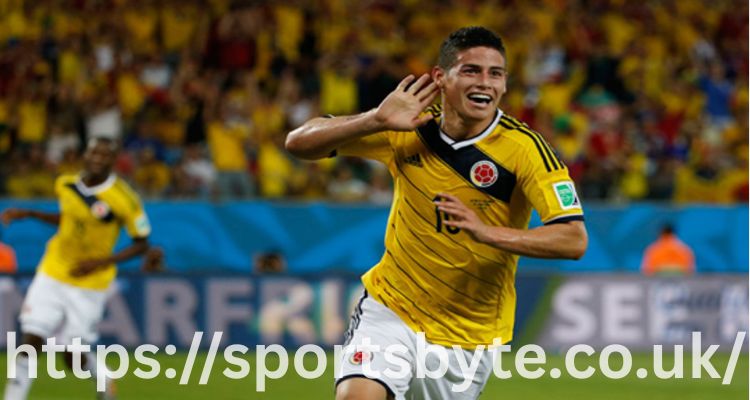
James Rodriguez of Colombia became a world icon in the summer of 2014, topping the goalscoring charts in the FIFA World Cup despite starting as just another promising midfielder. The same had been previously done by Salvatore Schillaci at Italia 90, who came out of relative anonymity to conquer the tournament. These incidences pose an interesting question: why do some players perform exceptionally on the largest international stages and seem to be non-existent at the club levels?
This trend is important to fans, analysts, and bettors aiming to gain an advantage, particularly if you plan to make your 2026 World Cup predictions on Wincomparator, the World Cup betting experts.
The Psychology of the ‘Big Game Player’
Football psychology is critical in over performing by players. There are players who perform best when they are under pressure, who could use the intensity of a great tournament, and there are those who cannot perform under the same level of intensity. The ‘big game player’ is characterized by being calm, self-assured and capable of hitting at his best in times when the stakes are the highest.
A good example of this mentality is Cristiano Ronaldo. His career is full of moments which made him, and he was motivated by unstoppable ambition and national pride. Didier Drogba also developed a reputation of performing when needed most and he embraced pressure as an impetus but not a burden.
The emotional meaning is enhanced by international tournaments. Representation of a country brings about greater responsibility that in most cases outweighs the club obligations. This emotional load heightens concentration and performance in some players.
The environment of the tournament is also an issue. Long training camps build team spirit, and the publicity of the media around the world intensifies the pressure. When players are inspired to harness this ambience, they tend to perform better. These psychological characteristics should be identified to analyze the tournament football correctly and make smarter predictions.
Tactical Systems: When National Team Fit Exceeds Club Role
Another significant cause of overperformance of players is tactical context. The role of a footballer in a club may not be able to make the best use of his strengths but a national team arrangement can help to open his potential.
A good illustration is Olivier Giroud. Being underestimated at the level of the club, he was important for France because of his physical strength, connecting play, and discipline. The French system made maximum use of his efforts, even when he was not scoring goals.
This leads to managers of national teams developing systems that are based on players whom they trust and this makes them more influential. This trust can improve the level of performance tremendously. Also, tournament football has a tendency to lean towards practical play, particularly in the knock out matches. Defensive structure, reversals, and set plays are decisive, and favor particular player profiles.
To the soccer betting fans, it is important to consider the position of the soccer player in his national team. Strategic fit has the potential of turning a decent player into a tournament star.
Anatomy of a Tournament Specialist: Historical Case Studies
The aspect of the tournament specialist has put emphasis on the players that make it to shine in international arenas. These individuals have the ability to integrate psychological strength and tactical appropriateness, delivering performances that mark their careers.
The World Cup Heroes: Miroslav Klose & James Rodríguez
Miroslav Klose is one of the most regular players in the history of the World Cup. He succeeded in Germany despite a club career that rarely matched the scale of his international legacy due to his outstanding positioning skills, efficiency and a system that worked to his advantage.
James Rodriguez’s 2014 breakout illustrates another dimension. Having been given liberty in the midfield where he operated in an advanced position, he was able to blend creativity with confidence in scoring spectacular goals. With every match, his momentum and belief increased, and it was a testament to how psychological elements can enhance tactical advantages.
The two players demonstrate how the appropriate environment can take performance to a whole new level.
The Continental Star: From the Euros to Copa América
The World Cup is not the only tournament that has been over performed. The Euro 2004 Milan Baroš is a typical case. The Czech striker was the top scorer, and he thrived in an approach that was founded on quick transitions and attacking liberty, but never again reached that standard on a regular basis in club football.
Recently, Emiliano Martínez has shown the same characteristics for Argentina. His focus during shootouts in penalties and other stressful situations at Copa América and the World Cup demonstrated the power of mentality in winning a tournament.
These instances affirm that there are unique players that may be favored in international games.
How to Spot the Next Breakout Star: Applying These Insights for 2026
To determine the breakout players of the World Cup, one needs to go beyond the conventional statistics. Predictions can be enhanced by a systematic method:
* Is the player a pressure player?
* Do they form the core of their national team tactic?
* Are they well supported by the manager?
* Does the style of the team contribute to their strengths?
* Do they go into tournaments with confidence and momentum?
The combination of these qualitative variables with data that includes expected goals and assists forms a more realistic image. This approach is essential for World Cup 2026 betting.