
Teen Patti is one of those card games that feels easy at first—and then suddenly gets very real once the betting starts. If you don’t understand the Teen Patti rules, you’ll notice it quickly, usually at the worst possible moment. A few small decisions can cost you the entire round.
These days, many players discover the game online rather than around a physical table. Platforms like the Teen Patti online game make it accessible anytime, but the core experience hasn’t changed much. You still rely on instinct, timing, and the ability to read people—even through a screen.
There’s also something important to keep in mind. Since August 2025, India has enforced the PROGA law, which bans real-money online gaming entirely. That means playing Teen Patti for money online is no longer a gray area—it’s officially restricted. Social or informal play still exists, but anything involving real stakes online should be approached with caution.

What Is Teen Patti? Basics Every Player Should Know
At its core, Teen Patti is a three-card game where players compete not just with cards, but with behavior. It’s often compared to poker, but it’s faster, more direct, and in many ways more psychological.
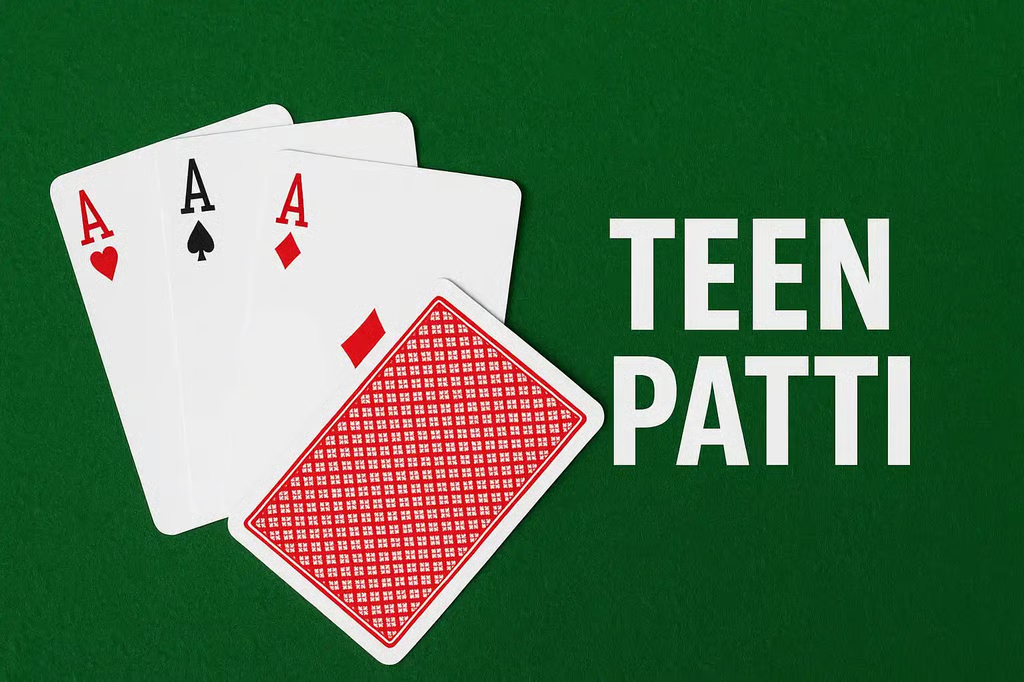
A typical table includes anywhere from three to seven players. A standard 52-card deck is used, no jokers. Each player gets three cards face down, and from there, everything depends on how the round unfolds.
The goal is simple:
either end up with the strongest hand—or convince everyone else to drop out before it gets that far.
To follow the game without confusion, you’ll need a few key terms:
- Boot – the starting amount each player puts into the pot
- Blind – playing without looking at your cards
- Seen – playing after checking your cards
- Pack – folding and leaving the round
- Show – comparing hands at the end
What makes Teen Patti interesting is that it isn’t rigid. Many groups tweak small rules or agree on variations before starting. That flexibility is part of the game’s identity—but it also means you need to understand the basics before jumping in.

How to Play Teen Patti: Step-by-Step Guide
If you’re trying to figure out how to play Teen Patti, the structure is actually quite straightforward. The tricky part isn’t the rules—it’s knowing when to stay in and when to walk away.
Here’s how a typical round plays out:
- Everyone contributes to the pot
Before anything begins, each player places a fixed amount into the pot. This creates immediate stakes. - Cards are dealt
Each player receives three cards, face down. At this point, no one knows what anyone else has. - You choose how to play
You can stay blind and not look at your cards, or check them and play as seen.
Blind players take more risk but spend less. Seen players have more information but commit more money. - Betting begins
One by one, players decide whether to match the current bet, raise it, or fold. The pressure builds quickly, especially when the pot grows. - Optional sideshow
If you’re playing seen, you can request a comparison with the previous player. One of you leaves the round without revealing cards to everyone else. - Final showdown
When only two players remain, one can call for a show. The hands are revealed, and the stronger one takes the pot.
The flow is simple, but the decisions are not. Staying blind can make you unpredictable. Playing seen gives you control—but also exposes hesitation. Over time, you start noticing patterns, both in yourself and in others.
Teen Patti Hand Rankings
Understanding hand rankings is essential. There are only a few combinations, but each one carries real weight because players only hold three cards.
Here’s the full ranking from strongest to weakest:
| Rank | Hand Name | Description | Example |
| 1 | Trail (Set) | Three cards of the same rank | A♠ A♦ A♣ |
| 2 | Pure Sequence | Three consecutive cards of the same suit | 7♠ 8♠ 9♠ |
| 3 | Sequence | Three consecutive cards, mixed suits | 4♣ 5♦ 6♠ |
| 4 | Color | Same suit, not in sequence | K♠ 9♠ 3♠ |
| 5 | Pair | Two cards of the same rank | Q♦ Q♠ 7♣ |
| 6 | High Card | No combination, highest card wins | A♣ J♦ 5♠ |
Because there are only three cards in play, strong hands stand out more clearly than in poker. A Trail is rare and powerful. Even a simple pair can feel strong depending on how others are betting.
What matters just as much as the cards themselves is how believable your play is. A weak hand played confidently can win. A strong hand played nervously can lose.

Betting Rules and Gameplay Mechanics
If there’s one thing that defines Teen Patti, it’s the betting. That’s where the game shifts from simple to intense.
The biggest factor is the difference between blind and seen play:
- Blind players risk more uncertainty but spend less
- Seen players know their cards but must bet higher
This creates constant tension. Someone betting aggressively while blind might be bluffing—or might be forcing others to second-guess themselves. Meanwhile, a seen player with a decent hand might hesitate and give away too much.
Then there’s the sideshow. It’s a quiet move, but it can change everything. Two players compare hands privately, and one exits. No drama, no reveal—just one less opponent.
Betting styles can also vary depending on the table:
- Fixed limits keep things controlled
- Pot-based betting grows naturally with the game
- No-limit formats allow bold, risky plays
That’s why the idea of Teen Patti all game isn’t about one single version. The rules stay familiar, but the feel of the game can shift depending on how people play, how much they risk, and how confident they are in their decisions.
Popular Variations of Teen Patti
Once you’ve played a few rounds, the standard version can start to feel predictable. That’s usually the moment when someone at the table says, “Let’s try something different.” And that’s how most variations come into play — not as official formats, but as house ideas that stuck.
This is where Teen Patti all game really makes sense as a phrase. People don’t just play one version. They switch things up depending on mood, group, or even how the last few rounds went.
Some variations are simple tweaks. Others change the logic of the game completely.
- Muflis (Lowball)
In this version, everything flips. The worst hand wins. A high card suddenly becomes a problem, not an advantage. It sounds like a joke at first, but it quickly forces you to rethink how you evaluate your cards. - AK47
Here, Aces, Kings, 4s, and 7s act as wild cards. The moment you introduce wilds, the game becomes less about probability and more about guessing what’s even possible. - Joker-based games
Before the round starts, a card is picked as a joker. Sometimes more than one. It adds chaos in a controlled way — you know the rules, but outcomes feel less predictable. - Best of Four
Instead of three cards, you get four and choose the best three. It sounds like a small change, but it gives players just enough control to make decisions feel heavier. - 999 format
This one shifts the goal entirely. You’re aiming for a hand that totals as close to 9-9-9 as possible. It feels almost like a different game, but the betting and tension stay the same.
What’s interesting is that none of these replace the original. They sit alongside it. Some nights you play classic Teen Patti. Other nights, you barely touch it.
Tips for Beginners: How to Play Smart
Most beginners don’t lose because of bad cards. They lose because they react too quickly, or too emotionally. Teen Patti punishes impatience more than anything else.
If you’re just starting out, a few simple habits can make a big difference:
- Stay blind longer than feels comfortable
It sounds counterintuitive, but not looking at your cards right away can actually help. It keeps your actions less predictable and your betting cheaper in the early rounds. - Watch how people behave after they look
Some players can’t hide it. The moment they see their cards, their posture changes, their timing shifts. You don’t need perfect reads — just notice patterns. - Don’t try to win every hand
This is probably the fastest way to lose money. Some rounds aren’t worth chasing. Folding early is often the smarter move. - Keep your reactions consistent
If you act confident only when you have a good hand, others will figure it out quickly. The goal is to look the same no matter what you’re holding. - Be careful with “revenge rounds”
Losing one hand can make you want to jump into the next one aggressively. That’s usually when things go wrong. - Use bluffing sparingly
Bluffing works best when it’s unexpected. If you do it too often, it stops being convincing.
None of this is complicated, but it takes time to actually apply it. You’ll forget, make mistakes, and then slowly adjust.

Expert Insight: What Makes Teen Patti Unique
There’s a reason people who enjoy poker often get drawn to Teen Patti — but also why they sometimes struggle with it at first.
Poker player and author Doyle Brunson once said in Super/System: “The key to No-Limit poker is to put a man to a decision for all his chips.”
That idea fits Teen Patti in a quieter, faster way. You’re not always going all-in, but you’re constantly forcing small decisions. Stay in or fold. Raise or hesitate. Trust your hand or trust your read. And because each player only has three cards, there’s less room to hide behind complex combinations. The game becomes more about pressure than math.
Over time, you notice something shift. You stop focusing only on your own cards. You start thinking about how your moves look to others. And then you adjust again based on that. That back-and-forth — that’s what keeps the game interesting.
Conclusion: Mastering Teen Patti Rules
At the beginning, everything feels a bit random. Cards come and go, bets don’t always make sense, and it’s easy to feel like luck decides everything. But after a while, patterns start to show up.
You notice who plays aggressively when they’re unsure. You notice who slows down when they’re strong. You start catching small signals that didn’t mean anything before. That’s when the Teen Patti rules stop feeling like instructions and start feeling like a framework. Something you can actually use, not just follow. The game doesn’t really change — your perspective does.
FAQ
What is the strongest hand in Teen Patti?
The best hand you can get is a Trail — three cards of the same rank. For example, three Kings or three Aces. It doesn’t show up often, which is why players tend to react strongly when someone keeps betting confidently until the end.
Is Teen Patti more about luck or experience?
At the beginning, it feels like luck decides everything. But after a few sessions, you start noticing patterns. Players repeat the same behaviors, and those small details become useful. So yes, luck matters — but experience changes how you use it.
What’s the real difference between blind and seen play?
Blind means you’re playing without checking your cards. You’re relying more on instinct and table dynamics. Seen means you’ve looked, so you know what you’re holding — but you also commit more money. It’s a trade-off, not an upgrade.
How long does a typical round last?
Some rounds end in under a minute if players fold early. Others can stretch out if several people keep raising. It really depends on how stubborn or confident the players at the table are.
Do you need to bluff to win?
Not necessarily. You can win by playing solid hands and staying patient. But bluffing does help in certain moments — especially when the table is cautious. The key is not to overdo it, or people stop believing you.
Why do experienced players sometimes fold strong hands?
Because the situation doesn’t feel right. Maybe the betting pattern looks off, or someone is playing unusually aggressively. In Teen Patti, players don’t rely only on cards — they trust the overall picture.
Are rules always the same in every game?
The base rules stay consistent, but small changes happen all the time. Different groups add their own twists, especially when it comes to variations or side rules. It’s always a good idea to clarify before starting.