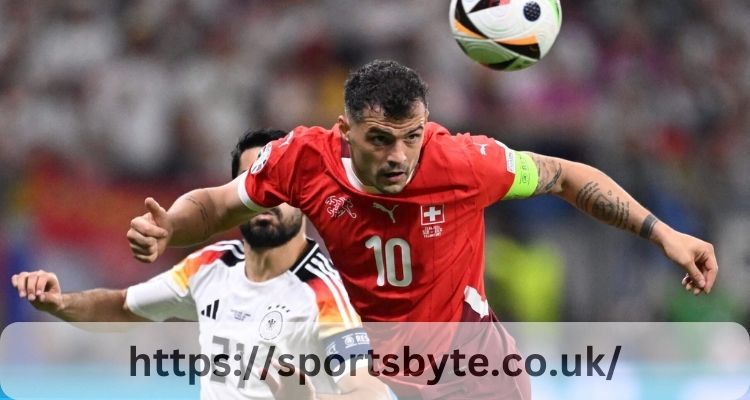
Minute 63. The full-back is already sprinting. The winger drifts inside instead of hugging the line. The central midfielder doesn’t stay behind — he attacks the penalty area like a second striker. Three passes later, the defence is disorganised. Shot. Goal.
No one in the stadium is thinking about formation at that moment.
And yet, a few hours later, the debate begins again: was that the best attacking formation in football at work?
Open any tactical discussion or check the latest football score today and you will notice something slightly ironic. Teams score four goals with three centre-backs. Others dominate with a classic 4-3-3. Some play 4-2-3-1 and look explosive; others use the same system and barely create a chance.
So what is an attacking formation in football, really? And when people ask which formation is best in football, are they even asking the right question?
Maybe the problem is that we start from the wrong place.
The Numbers Game: Breaking Down the Data
When analysts sit down to compare formations, they look at specific metrics. Not just goals scored, but how those goals happen. Where do chances come from? Which shape creates the most danger from open play? Which one relies on set pieces? The answers might surprise you.
Here is a comparison of how the three major attacking formations performed across the last five Premier League seasons, based on aggregated data from Opta and other football analytics sources:
| Metric | 4-3-3 | 4-2-3-1 | 3-4-3 |
| Average possession % | 58.3 | 53.7 | 51.2 |
| Goals per game | 1.9 | 1.8 | 1.9 |
| Shots per game | 15.2 | 14.1 | 14.8 |
| Chances created from wide areas | 38% | 41% | 49% |
| Goals conceded per game | 1.1 | 0.9 | 1.0 |
| Clean sheet percentage | 28% | 34% | 31% |
Look at those wide area numbers for the 3-4-3. Nearly half their chances come from out wide, which makes sense when you have wing-backs bombing forward all game. The 4-3-3 creates more centrally because those three midfielders can pull opposition defenders out of position. The 4-2-3-1 sits in the middle across almost every metric, which is exactly why so many managers love it—it does everything well without obvious weak spots.
But here is the thing about data. It tells you what happened, not why it happened. That 4-2-3-1 defensive record looks impressive until you realise that teams playing this formation often face opponents who sit deep and try to counter. The clean sheet numbers might say more about the opposition than the shape itself. You always have to take stats with a pinch of salt and a good look at the context.
What Makes Each Formation Tick
To really understand these shapes, you have to look at what they ask from individual players. Each formation has non-negotiable requirements. Get these right and the system sings. Get them wrong and you might as well be playing with ten men.
The 4-3-3 demands:
- A defensive midfielder who can read the game like a chess grandmaster and break up attacks before they develop
- Two attacking midfielders with endless energy to press and creativity to unlock defenses
- Wingers who can beat their man one-on-one but also track back when the full-back needs help
- Full-backs with the stamina to get forward and the recovery speed to get back
The 4-2-3-1 relies on:
- Two holding midfielders who communicate constantly and cover for each other
- A number ten with the vision to find passes that others cannot see
- Full-backs who pick their moments to overlap rather than just running forward constantly
- A lone striker who can hold the ball up and bring others into play
The 3-4-3 needs:
- Three center-backs who are comfortable on the ball and can step into midfield when required
- Wing-backs with the lungs of marathon runners and the delivery of prime David Beckham
- Two central midfielders who understand when to sit and when to join attacks
- Forwards who press relentlessly and interchange positions without thinking
Notice something? Every formation asks different questions. A player who thrives in a 4-3-3 might look lost in a 3-4-3. That is why the best managers build systems around their players, not the other way around. You cannot just buy eleven talented individuals and hope they figure it out. The formation has to fit the squad like a glove, not like someone else’s coat.
What the Legends Actually Say
Johan Cruyff understood this better than almost anyone. He built teams around ideas, not numbers. The shape on the whiteboard was just a starting point. What mattered was how players interpreted it.
Pep Guardiola, who absorbed Cruyff’s philosophy at Barcelona and built his own legacy on it, talked about this in a 2021 interview with the club’s official media channel. He was asked about goal distribution and whether he wanted one player scoring fifty a season. His answer cut to the heart of modern attacking football:
“I would love to have a guy who scores 50 goals, but at the same time I don’t like to put all the pressure on one player. The statistics speak for themselves, you need three guys with more than 10 goals to be competitors.”
Think about what he is saying. The best attacking formation in football is not about creating a system for one superstar. It is about spreading the threat so defenders cannot focus on stopping a single player. When Guardiola’s teams are at their best, goals come from everywhere. Wingers. Midfielders. Even center-backs arriving late at the back post. The formation enables that by creating multiple threats simultaneously.
That 2021 Manchester City side had Ilkay Gundogan scoring late runs into the box. Riyad Mahrez cutting inside from the right. Raheem Sterling finding space between full-back and center-back. Kevin De Bruyne smashing them from distance. Fourteen different players scored that season. That is not an accident. That is design.
So Which One Actually Wins?
Here is where we get to the question everyone wants answered. If you are sitting there wondering which formation is best in football, I have some good news and some bad news.
The bad news is there is no single answer. The 4-3-3 won everything with Barcelona and dominates modern possession football. The 4-2-3-1 has been the most used formation in the Premier League for a decade because it balances attack and defense so well. The 3-4-3 gave Chelsea a title and turned Antonio Conte into a genius. They all work.
The good news is we can stop pretending there is one perfect shape. The game has evolved past that. Watch any top team now and you will see them use multiple formations within the same match. Manchester City defend in a 4-4-2, build up in a 3-2-5, and attack in something that looks like a 2-3-5 with players everywhere. Liverpool under Klopp would press in a 4-3-3 but attack with full-bombs forward and the front three interchanging constantly.
So maybe the real answer to best football formation in the world is not a set of numbers at all. Maybe it is the ability to change. To adapt. To look one way and then become something else entirely before the opposition can react. That is what Guardiola means when he talks about positional play. The numbers on the teamsheet are just the starting point. What happens after the whistle blows is what matters.
The Future Is Already Here
If you watch enough football, you start noticing patterns. Teams that looked revolutionary five years ago now seem almost normal. The innovations get copied, improved, and eventually become standard. That is how the game evolves.
Right now, we are seeing a shift towards even more fluidity. Full-backs who play as midfielders—like Trent Alexander-Arnold did for England or John Stones does for City. Center-backs who step forward and create chances. Strikers who drop so deep they might as well be number tens. The positions on the teamsheet are becoming less relevant every season.
Some coaches are experimenting with asymmetrical formations. Deliberately unbalanced shapes that confuse opponents. Imagine a back four where one full-back stays deep while the other pushes into midfield. A front three where one winger hugs the touchline and the other drifts inside. It creates chaos for defenders who are used to facing symmetrical systems.
Others are looking at how to overload specific zones based on where the opposition is weakest. Data now allows teams to identify exactly where chances are most likely to come against each opponent. If the opposition right-back is weak in the air, you target him with crosses. If their holding midfielder is slow to turn, you play runners in behind him. The formation becomes a tool for exploiting these weaknesses, not a rigid structure.
Through all this evolution, one thing stays constant. Football is still about putting the ball in the net more times than the other team. The best attacking formation in football will always be the one that does that most effectively, however it looks on the day. Whether that is a classic 4-3-3, a modern hybrid system, or something we have not even seen yet, the principle remains the same. Create chances. Score goals. Win games. Everything else is just detail.

Conclusion: The System Is a Tool, Not the Goal
After decades of tactical evolution, one thing remains constant: formations support ideas, they do not replace them.
Width, movement, pressing, tempo — those elements decide whether a team looks dangerous. Several systems can deliver them. None owns them exclusively.
So when someone asks which formation is best in football, the honest answer is conditional.
The best formation is the one that fits the players, suits the opponent, and allows attacking intent to stay aggressive for 90 minutes.
That is where goals are born.
FAQ
What is the most attacking formation in modern football?
There isn’t one single setup that automatically guarantees attacking football. Some teams look explosive in 4-3-3, others in 3-4-3. What really makes a system attacking is how many players commit forward and how quickly they react after winning the ball. The formation itself is only part of the picture.
Is 4-3-3 the best attacking formation in football?
It can be, but only under the right conditions. If the wingers are brave enough to take defenders on and midfielders regularly join the attack, 4-3-3 becomes very hard to defend. Without that energy and movement, it turns into safe passing around the box rather than real pressure.
Which formation is best in football for scoring goals consistently?
Teams score regularly when they create overloads and put multiple players in the penalty area at the right moment. That can happen in different systems. What matters more is timing, movement, and confidence in the final third, not just the numbers written before kickoff.
Can a so-called defensive formation become attacking during a match?
Absolutely. A team may start with a cautious shape but push full-backs higher and press aggressively once the game opens up. Formations are flexible in practice. The same structure can look defensive in one phase and very aggressive in another.
What is the best football formation in the world right now?
There isn’t a universally accepted answer. Top clubs succeed with several different systems. The formation that looks dominant usually matches the strengths of the squad and fits the coach’s philosophy. When players understand their roles clearly, the system becomes effective.