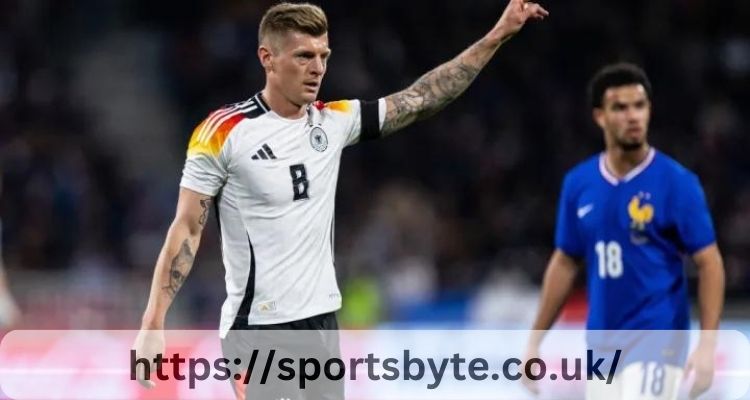
When Germany host the Netherlands at Berlin’s Olympiastadion on Monday 16 November, it will be less than two months since these sides drew 1-1 in Amsterdam, and the Germany National Football Team vs Netherlands National Football Team Lineups that emerge this time will say a lot about where two rebuilding teams really stand. Both have new managers. Both left this summer’s World Cup earlier than they wanted. And both still have a Nations League quarter-final place to fight for. This guide covers what happened in September, who is in each squad right now, how each coach is likely to set up, and how the last ten meetings between the old rivals actually went.
Why this one matters more than a normal group game
Nations League group matches rarely get anyone’s pulse racing, but this pairing is the exception. Germany and the Netherlands share League A, Group 2 with Greece and Serbia, and the top two sides after the final round go through to the quarter-finals in March 2027. Heading into the last international window, the Netherlands and Greece were level on eight points, Germany were third on five, and Serbia were still waiting for their first point. Those numbers will move on 13 November, when Germany travel to Serbia and the Dutch host Greece, so the picture could look quite different by the time the teams walk out in Berlin three days later.
Then there is the human story. Jürgen Klopp took over from Julian Nagelsmann this summer, and this is his first job in international football. His first four games brought one win, two draws and a historic home defeat to Greece, who had never beaten Germany in ten previous attempts. Xavi Hernández, appointed after Ronald Koeman left following the Dutch exit on penalties against Morocco in the last 32 of the World Cup, has been a little steadier: two wins and two draws from four. The catch is that his team has now conceded in twelve matches in a row, and Xavi himself admits it is something they are working on. Germany, meanwhile, have scored just three goals in four games. Something has to give.
How the two sides lined up in Amsterdam
Both coaches chose a 4-2-3-1 on 24 September at the Johan Cruijff ArenA. Here is how they started:
- Netherlands: Verbruggen; Dumfries, Van Hecke, Van Dijk (captain), Van de Ven; Gravenberch, Q. Timber; Summerville, Reijnders, Gakpo; Brobbey.
- Germany: ter Stegen; Treu, Tah, Schlotterbeck, Brown; Nmecha, Kimmich (captain); Adeyemi, Amiri, Schade; Havertz.
The match had a bit of everything. Early on, the Dutch thought they had scored from a well-worked corner when Van Dijk got on the end of it, but VAR spotted an offside against Brobbey and the goal was chalked off. Germany then lost Havertz after about half an hour, with Younes Ebnoutalib replacing him, and moments later took the lead: Karim Adeyemi crossed, Felix Nmecha finished. Xavi swapped Brobbey for AZ’s Mexx Meerdink shortly after, and the Dutch pushed for the rest of the game. They got their reward in stoppage time when PSV’s Ruben van Bommel, one of the late substitutes, set up Cody Gakpo to make it 1-1.
It was a fair result. The Netherlands had the better of the late stages, Germany had the better of the first half, and neither manager could claim a winning start.
Germany: Klopp’s 24 for the November double-header
After calling up 44 players in September to see as many options as possible, Klopp has cut the group to 24 for the Serbia and Netherlands games. He said it was hard, because more players deserved a place than he could take, and the list is a mix of experience and very young talent.
Goalkeepers. Marc-André ter Stegen (Ajax) is the number one, and Klopp has now said so openly after rotating all three keepers in September. Alexander Nübel (Besiktas) and Jonas Urbig (Bayern Munich) are the other two. Klopp’s thinking is interesting: he wants a goalkeeper who can read danger behind a high defensive line and organise the team in possession, not only make saves, and he feels ter Stegen has the most experience of that.
Defenders. Jonathan Tah (Bayern) and Nico Schlotterbeck (Dortmund) started in Amsterdam and look like the first-choice centre-back pair. Behind them, Waldemar Anton (Dortmund), Malick Thiaw (Newcastle) and Stuttgart’s Finn Jeltsch, whose name keeps being linked with bigger clubs, offer depth. At full-back, Philipp Treu (Freiburg) and Nathaniel Brown (Bayern) both started in September, while Maximilian Mittelstädt (Stuttgart) brings experience on the left.
Midfielders and creators. Joshua Kimmich (Bayern) wore the armband in Amsterdam and is still the team’s metronome. Felix Nmecha (Dortmund) scored the German goal there and was one of the better players on the pitch. Aleksandar Pavlovic and Tom Bischof, both of Bayern, add control and passing range. Florian Wirtz (Liverpool) is the creative heartbeat and was the standout in the 2-0 win over Serbia. Then comes the youth movement: Bayern teenager Lennart Karl, Köln’s Said El Mala, Leipzig’s Brajan Gruda, Freiburg’s Derry Scherhant and 17-year-old Wael Mohya of Borussia Mönchengladbach, who has earned his first senior call-up.
Forwards. Kai Havertz (Arsenal) led the line in Amsterdam before making way early. Younes Ebnoutalib (Eintracht Frankfurt) replaced him that night and is in the squad again. The most eye-catching name is Niclas Füllkrug, recalled after a strong loan spell at Werder Bremen from West Ham. He gives Klopp a very different, more physical option up front.
Who is missing? Leipzig duo David Raum and Ridle Baku were left out. Adeyemi, who created the goal in Amsterdam, plus Nadiem Amiri and Kevin Schade, all started in September but are not in this 24.
Netherlands: Xavi’s group and the names to know
At the time of writing, Xavi’s November squad had not been published, so this section is built on the 26 players he selected for September, plus what we saw on the pitch. Expect small changes when the official list lands.
Goalkeepers. Bart Verbruggen (Brighton) started against Germany. Robin Roefs (Sunderland) and Mark Flekken (Bayer Leverkusen) are the alternatives.
Defenders. Virgil van Dijk (Liverpool) is still the captain and the heart of the back line. After the World Cup exit he left his international future open, then chose to carry on after talking with Xavi. Micky van de Ven (Tottenham) is quick enough to cover almost anything, and Jan Paul van Hecke (Tottenham) started in Amsterdam, although he dropped out of the squad before the October trip to Greece with an injury, so his fitness is worth watching. Nathan Aké (Fenerbahçe), Jorrel Hato (Chelsea) and Lutsharel Geertruida (PSV) provide more options. On the right, Denzel Dumfries (Real Madrid), Jeremie Frimpong (Liverpool) and Jurriën Timber (Arsenal), who missed the World Cup through injury, are all in the picture.
Midfielders. Ryan Gravenberch (Liverpool) is the player who makes the Dutch midfield tick when he is on form, carrying the ball through pressure. Quinten Timber (Crystal Palace) started alongside him against Germany. Tijjani Reijnders (Al-Qadsiah) played the number ten role, and Teun Koopmeiners (Juventus) offers another high-quality option. Joey Veerman (Dortmund) is back after two years away from the national team, and Kenneth Taylor (Lazio) and Feyenoord’s Gjivai Zechiël, a first-time call-up, complete the group. Frenkie de Jong was still recovering from a knee injury in September, and there is no confirmed update on his availability.
Forwards. Cody Gakpo (Liverpool) scored the equaliser in Amsterdam, and fittingly he joined Liverpool while Klopp was still the manager there. Crysencio Summerville (Al-Hilal) gives the Dutch a direct runner on the wing, while Brian Brobbey (Sunderland) is the focal point up front. Donyell Malen (Roma), Noa Lang (Napoli), Justin Kluivert (Bournemouth), PSV’s Ruben van Bommel, son of former Dutch midfielder Mark, and AZ’s Mexx Meerdink, who scored both goals in the 2-1 win in Serbia, are all pushing for minutes.
Who is missing? Xavi left out Memphis Depay, the country’s all-time top scorer with 55 goals, along with Wout Weghorst, Marten de Roon and Stefan de Vrij. It was a clear statement that this is a fresh start.
Predicted lineups for Berlin
So what might the Germany National Football Team vs Netherlands National Football Team Lineups look like on the night? Treat the following as informed guesses rather than confirmed teams. Klopp has said he will not play “two different teams” this time, and Xavi has changed formations in each of his first four games, which makes the Dutch side especially hard to predict.
Germany (4-2-3-1): ter Stegen; Treu, Tah, Schlotterbeck, Brown; Kimmich, Nmecha; Karl, Wirtz, El Mala; Havertz.
There are two real questions. First, whether Klopp trusts a teenage wide pair such as Karl and El Mala in a game of this size, or leans on Gruda or Pavlovic for balance. Second, whether Füllkrug’s form earns him the start in place of Havertz. If Germany need a win to stay in the quarter-final race, a more direct approach with a proper number nine feels plausible.
Netherlands (4-2-3-1): Verbruggen; Dumfries, Van Dijk, Van Hecke, Van de Ven; Gravenberch, Q. Timber; Summerville, Reijnders, Gakpo; Brobbey.
The obvious alternatives are Hato or Aké at centre-back if Van Hecke is not fit, Koopmeiners in midfield, and Meerdink or Malen up front. If the Dutch are already through or chasing a result by the time Monday arrives, Xavi may also experiment with a back three, something he has hinted he is not keen on.
The last ten meetings
Here is how the most recent ten games between the two nations went, newest first.
| # | Date | Competition | Fixture | Score | Venue (city) | Result for Germany |
|---|---|---|---|---|---|---|
| 1 | 24 Sep 2026 | UEFA Nations League | Netherlands v Germany | 1-1 | Amsterdam | Draw |
| 2 | 14 Oct 2024 | UEFA Nations League | Germany v Netherlands | 1-0 | Munich | Win |
| 3 | 10 Sep 2024 | UEFA Nations League | Netherlands v Germany | 2-2 | Amsterdam | Draw |
| 4 | 26 Mar 2024 | International friendly | Germany v Netherlands | 2-1 | Frankfurt | Win |
| 5 | 29 Mar 2022 | International friendly | Netherlands v Germany | 1-1 | Amsterdam | Draw |
| 6 | 6 Sep 2019 | Euro 2020 qualifying | Germany v Netherlands | 2-4 | Hamburg | Loss |
| 7 | 24 Mar 2019 | Euro 2020 qualifying | Netherlands v Germany | 2-3 | Amsterdam | Win |
| 8 | 19 Nov 2018 | UEFA Nations League | Germany v Netherlands | 2-2 | Gelsenkirchen | Draw |
| 9 | 13 Oct 2018 | UEFA Nations League | Netherlands v Germany | 3-0 | Amsterdam | Loss |
| 10 | 14 Nov 2012 | International friendly | Netherlands v Germany | 0-0 | Amsterdam | Draw |
A few things jump out. Germany have not lost to the Netherlands since that 4-2 defeat in Hamburg in 2019, a run of five games with two wins and three draws. Five of the ten games ended level, and the goals are almost perfectly balanced, with Germany scoring 14 and the Netherlands 16 across the ten. Across all competitions, the two sides have met roughly 49 times, with Germany ahead on wins (18 to 12) and a lot of draws (19). Nothing in the recent record suggests an easy night for either side.
Where the game will be won
The midfield tussle. Kimmich and Nmecha against Gravenberch and Timber is the matchup to watch. Germany want to dictate tempo, the Dutch want to disrupt and run. Whoever wins the second balls will probably decide who controls the game.
Set pieces. The disallowed Van Dijk goal in September showed how well-drilled the Dutch are from corners, and Germany have the height to defend them, but Xavi’s side will keep pushing. At the other end, Tah and Schlotterbeck are both good in the air.
Wide areas. Dumfries and Gakpo give the Netherlands real threat on both flanks, so whoever Klopp picks at full-back has a long evening ahead. For Germany, the question is whether the young wide players can consistently turn possession into chances, something that has been a problem in their first four games under Klopp.
Mentality and the table. Both coaches are under pressure to show progress, and with a quarter-final place at stake, the cost of a loss is high. A draw might suit nobody. Expect a game with more intensity than a typical group fixture.
Frequently asked questions
1. When and where is Germany vs Netherlands? The match is on Monday 16 November 2026 at the Olympiastadion in Berlin, with kick-off at 20:45 local time. It is the final round of group fixtures in League A, Group 2 of the 2026/27 UEFA Nations League.
2. Who are the managers of each team? Jürgen Klopp manages Germany, his first national-team job, having replaced Julian Nagelsmann after the World Cup. Xavi Hernández manages the Netherlands after succeeding Ronald Koeman and is contracted through 2030.
3. What was the score the last time they met? It finished 1-1 in Amsterdam on 24 September 2026. Felix Nmecha put Germany ahead in the first half, and Cody Gakpo equalised in stoppage time after Ruben van Bommel’s assist.
4. Which players are likely to start? For Germany, expect ter Stegen in goal, with Kimmich, Nmecha, Wirtz and Havertz among the likely starters. For the Netherlands, Van Dijk, Dumfries, Gravenberch, Reijnders and Gakpo are the names most likely to be on the team sheet. The Dutch November squad had not been announced at the time of writing, so check the official lineups about an hour before kick-off.
5. What is at stake, and what is the head-to-head record? The top two teams in the group reach the quarter-finals in March 2027. Historically, Germany have 18 wins, the Netherlands 12 and 19 matches have ended in draws, and Germany are unbeaten in the last five meetings.
Final word
Nobody can say for certain how Klopp and Xavi will line up their teams until the official sheets come out, but we can say the Germany National Football Team vs Netherlands National Football Team Lineups will be studied closely by both fanbases, because this is not a normal Nations League night. Two proud football nations, two new coaches, a quarter-final place on the line and a history that goes back more than a century: it is hard to ask for more. Check back for the confirmed starting XIs once they are released, and if the squads change before kick-off, we will update the article.
England National Football Team Vs Brazil National Football Team Stats