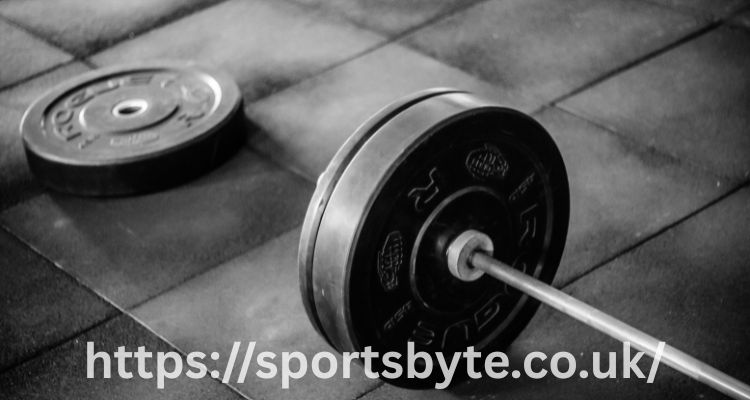
This guide explores the technical criteria, structural features, and design choices that make the difference between an ordinary barbell and one that is truly suited to a professional environment.
- Why the barbell is the technical core of the weight room
- Types of barbells: what they are and what they are used for
- Materials and construction: what sets a professional barbell apart
- Internal mechanisms and load capacity
- Durability and maintenance: a long-term investment
Why the barbell is the technical core of the weight room
The role of the barbell in performance and safety
Every free-weight exercise, from deadlifts to squats, from the military press to the bench press, revolves around the barbell. Its quality directly affects stability, smooth movement, and load control. A poorly designed gym barbell can compromise the entire training experience, increasing the risk of injury and limiting the athlete’s technical progression.
For anyone managing a weight room, it is therefore essential to invest in equipment that provides reliable guarantees in terms of construction, durability, and performance. The barbell is not a secondary accessory: it is the primary working tool for personal trainers, coaches, and athletes.
The importance of choosing professional models
Choosing a professional barbell means investing in a piece of equipment capable of withstanding hundreds of intensive-use cycles while consistently maintaining precision, grip, and optimal rotation. This results in better user experience, lower maintenance requirements, and greater equipment longevity.
A home-use or budget barbell can never offer the same quality in materials, dimensional tolerances, rotational smoothness, or resistance to stress. In a professional environment, these aspects are not optional: they are essential requirements.
Types of barbells: what they are and what they are used for
Olympic barbell: features and use
The Olympic barbell is the benchmark for dynamic lifts such as the snatch and the clean and jerk. It has a standard length of 220 cm, a grip diameter of 28 mm, and a weight of 20 kg (men’s version). It is designed to provide a certain degree of flexibility and smooth rotation, thanks to bearings or bushings in the sleeves.
This type is ideal for weightlifting or cross-training, where execution speed and the bar’s elastic response are crucial. A good Olympic barbell must ensure smooth performance under load, without play or friction that could interfere with the lift.
Powerlifting bar: focused on strength and stability
The powerlifting bar is designed for maximum-strength exercises: squats, bench press, and deadlifts. It has a thicker grip (29 mm) and a stiffer structure to minimize flex under very heavy loads. Unlike the Olympic barbell, it prioritizes absolute stability over elastic responsiveness.
It features more aggressive knurling and a different marking distribution, tailored to the grips used in powerlifting. Its design is intended to guarantee maximum control even with loads above 300 kg, with a firm and consistent grip.
Materials and construction: what sets a professional barbell apart
Steel, heat treatments, and coatings
The base material of a high-quality barbell is high-tensile steel, often heat-treated to improve resilience. Tensile strength is a key parameter: a good barbell should exceed 190,000 PSI to ensure controlled flexibility and long-term durability.
Coatings may vary: black zinc, hard chrome, or stainless steel. In addition to their aesthetic value, they provide protection against moisture and wear. In professional settings, it is preferable to choose finishes that require minimal maintenance and preserve the barbell’s technical characteristics over time.
Grip and knurling: hold, comfort, and control
Barbell grip is determined by the quality and depth of the knurling. Well-crafted knurling provides a secure hold even with sweaty hands, without being excessively abrasive. The right balance between comfort and grip is what distinguishes equipment designed for professional use.
The distribution of the knurling follows precise standards (IWF or IPF), and its quality directly affects lifting safety. Poorly designed or worn knurling can alter the athlete’s posture, increase the risk of slipping, and make training less effective.
Internal mechanisms and load capacity
Rotation system and sleeves
Sleeve rotation is crucial for smooth movement, especially in explosive exercises. Professional barbells incorporate high-precision ball bearings or bushings, allowing smooth, consistent, and quiet rotation even under load.
A good rotation system reduces stress on the wrists and shoulders, making the lift safer and more effective. In high-end models, rotation quality is factory-tested to ensure reliability even after thousands of uses.
Maximum load capacity and flexibility under stress
Every barbell has a maximum load capacity, which depends on both the strength of the material and the quality of the assembly. Professional models can withstand loads above 600 kg without permanent deformation.
In addition, the ability to return to position after controlled flexion (whip) is a quality indicator: it provides useful elastic response during the lift without compromising precision. This balance between stiffness and flexibility is the result of advanced engineering design.
Durability and maintenance: a long-term investment
How to assess long-term resistance
A professional barbell must maintain its performance even after years of use. Worn knurling, corrosion, and loss of sleeve smoothness are all signs of premature deterioration in low-end products.
Certified models produced by specialized brands undergo mechanical resistance tests, stress testing, and thorough quality control. It is important to evaluate the warranty offered by the manufacturer and the availability of spare parts to ensure continuous usability over time. Choosing a certified, high-quality barbell is an essential step for any professional weight room: at Donatif.com, you can find a complete range to meet every technical requirement.
Care and maintenance for consistent performance
Routine maintenance includes regular cleaning of the knurling with nylon brushes, lubricating the sleeves, and checking for any surface oxidation. Professional barbells are designed to make these operations easier without requiring complex disassembly.
Taking care of a barbell means protecting it from external agents but also ensuring users consistently high-performance and safe training experience. It is a responsibility that every gym owner should take seriously.