
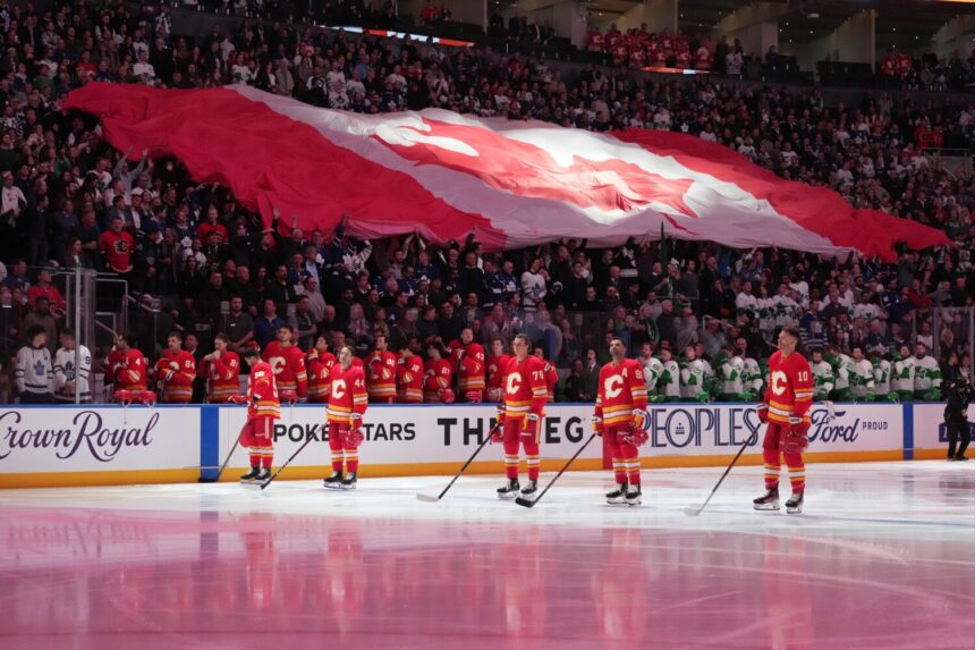
Ask a Canadian what sport defines their country, and almost everyone says hockey without hesitating. It’s the instinctive answer, the one built into national mythology from frozen ponds to Stanley Cup parades. But spend time with the actual participation data from the past decade and a different, more complicated picture comes into focus. Hockey still dominates the cultural conversation. It no longer dominates the choices Canadian families are making for their children – and the sports filling that gap are reshaping what Canadian sport looks like, sounds like, and means to the next generation.
This isn’t a sports-are-dying story. It’s something more interesting: a country with a deeply fixed sporting identity quietly working out what it actually wants to be. For fans who want to read more about how growing sports interest translates into broader entertainment options, the trajectory of Canadian sport participation tells you a lot about where that interest is heading.
Hockey’s Grip on Youth Is Loosening
The headline statistic is hard to talk around. Youth hockey participation in Canada peaked at over 523,000 registered players under 18 in 2010. By 2022, Hockey Canada reported that number had dropped to around 411,000 – a decline of roughly 22 percent over twelve years that began well before the pandemic. A partial rebound brought registrations to approximately 436,000 in 2023, but that figure remains below pre-pandemic levels at a time when Canada’s overall population has grown substantially.
The reasons aren’t complicated. A competitive hockey placement in Ontario can cost families upward of $4,000 per season before travel and equipment. Ice time is scarce and expensive. Practices get pushed to early mornings or late nights because rinks are booked solid. The Canadian International Ice Hockey Federation reports roughly 7,800+ indoor rinks across the entire country – a number that hasn’t grown meaningfully while the population doubled over fifty years. For immigrant families arriving in Canada’s cities, hockey simply doesn’t compete on accessibility.
That simple word – accessibility – explains most of what is happening across Canadian sport right now.
Soccer Quietly Became the Country’s Most Played Sport
Canada Soccer reported over one million registered players as of 2024, a figure that made soccer the most played organised sport in the country by registration numbers. More than 50 percent of those players are under 18. The Government of Canada officially identifies soccer as the top sport among Canadian children. The Canadian Youth Sports Report by Solutions Research Group found soccer ranked first among young people at 16 percent – ahead of swimming, hockey, and basketball.
The reasons are structural. A soccer ball costs less than a hockey stick. A pitch requires no refrigeration or facility booking. In a country with the most multicultural urban population in North America, soccer arrives pre-installed in a huge proportion of immigrant communities from South Asia, West Africa, Latin America, and the Caribbean. The sport doesn’t need to sell itself in those communities – it already belongs there.
The professional side has reinforced this. MLS entered Canada in 2007 with Toronto FC, and the league now has three Canadian clubs including the Vancouver Whitecaps and CF Montreal. The Canadian Premier League launched in 2019 as a fully domestic league. And the national men’s team’s qualification for the 2022 FIFA World Cup – their first since 1986 – pulled in 2.8 million Canadian viewers for the Copa America semi-final against Argentina in 2024 alone.
Basketball’s Rise Has Been Faster Than Anyone Predicted
In 2014-15, twelve Canadians appeared on NBA opening-night rosters. By the 2024-25 season, that number was 24 – making Canada the most represented country outside the United States in the NBA for the eleventh consecutive season. Shai Gilgeous-Alexander won the NBA MVP award in the 2024-25 season, becoming only the second Canadian to claim the honour after Steve Nash. Over 170 Canadians were simultaneously playing NCAA men’s basketball – the development pipeline feeding that NBA presence.
The Toronto Raptors’ 2019 championship was the accelerant. Basketball courts in Toronto, Mississauga, and Vancouver filled up in the years that followed. Youth programs expanded. Cities invested in outdoor courts. The sport’s low barrier to entry — a hoop, a ball, and a flat surface — made it competitive with soccer in urban environments where ice rinks remain out of reach for many families.
The Shift in Numbers, Side by Side
The clearest way to see what is changing is to put the sports side by side:
| Sport | Youth Participation Trend | Professional League(s) in Canada | Key Recent Milestone |
| Hockey | Down ~22% since 2010 peak | NHL (7 Canadian teams) | Partial youth rebound in 2023 |
| Soccer | Over 1M registered (2024) | MLS (3 clubs), CPL | 2022 World Cup qualification |
| Basketball | Rising steadily | NBA (Toronto Raptors) | 24 Canadians in NBA (2024-25) |
| Baseball | Stable | MLB (Toronto Blue Jays) | Blue Jays consistent playoff contender |
The table doesn’t tell you hockey is finished – it isn’t. NHL viewership remains high, the professional game commands enormous media coverage, and the sport’s cultural weight in Canada isn’t going anywhere. What the table shows is that the base of the pyramid is changing shape. The kids being introduced to sport today in Canada’s major cities are more likely to start with a soccer ball or a basketball than with hockey skates.
What This Means for How Canada Follows Sport
Shifts in participation tend to lead shifts in fandom – usually by about a generation. The children who grow up playing soccer and basketball will, as adults, follow those sports more closely, spend money on tickets and merchandise connected to them, and push broadcasters to dedicate more airtime to them. The 18.7 million Canadian viewers who watched the Euros and Copa America combined in the summer of 2024 – a figure reported by Bell Media – represent exactly that dynamic in early motion.
Canada is not becoming a country that abandons hockey. It is becoming a country where hockey competes for attention and resources with a genuinely multi-sport culture rather than operating as the default setting. That is a different kind of sports nation, and honestly a more interesting one. The generation currently growing up in Canadian cities will inherit a sporting landscape that their parents wouldn’t quite recognise – built on ice, yes, but increasingly shaped by the pitch and the hardwood too.